
One Panel, Four Panels, or Infographic: Choosing a Comic Format
Choose the right AI comic format for jokes, stories, tutorials, product explanations, and social content.
 Comic Brief Team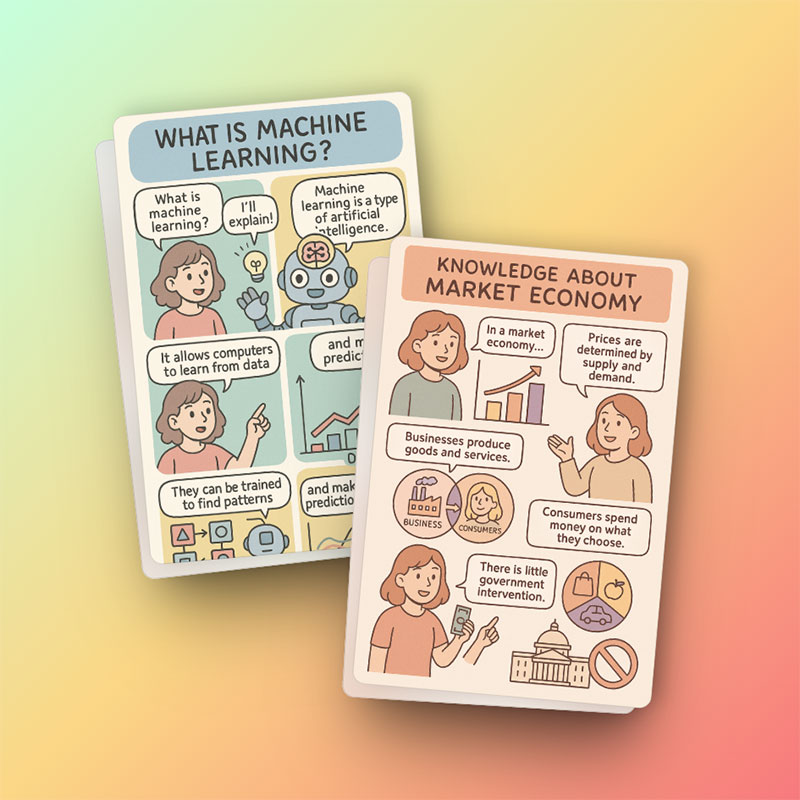
Format determines how a reader experiences an idea. Choosing it before writing the prompt improves pacing, composition, and readability.
Use One Panel For One Moment
A one-panel comic works best when the setup is already familiar and the image delivers one reaction, contradiction, or punchline. It is useful for social posts, workplace humor, mascots, announcements, and visual metaphors. Keep the cast small and give the viewer one clear focal point.
Use Four Panels For Change
Four panels are effective when something develops: a problem appears, a character tries something, the situation changes, and the result lands. The structure works for short stories, before-and-after demonstrations, customer scenarios, educational sequences, and campaign narratives. Each panel should add new information.
Use Infographic Comics For Understanding
Choose an infographic comic when the reader must compare, remember, or follow information. It suits tutorials, product features, timelines, data stories, checklists, and concept explanations. Limit the page to a few key points, organize them in a visible reading order, and verify all text and figures.
A Quick Decision Test
- If the idea can be understood in one glance, use one panel.
- If the value comes from a sequence or reversal, use four panels.
- If the reader needs labels, steps, or comparisons, use an infographic.
When unsure, write the idea as four short beats. If only the final beat matters, reduce it to one panel. If the beats are mainly facts rather than actions, turn them into an infographic structure.